
Unlocking investment for Ethiopian financial institutions through ESG
Ethiopia's financial sector has significant potential to attract international investment. However, there has been a critical challenge. Without standardised environmental, social and governance (ESG) guidelines, there has been a mismatch between development finance institutions’ (DFIs) expectations on ESG and Ethiopian financial institutions’ capacity to deliver on those expectations. This has limited the flow of long-term capital into one of Africa's most dynamic frontier markets.
That is changing. In 2025, the Accounting and Auditing Board of Ethiopia (AABE) and the International Finance Corporation (IFC) published their Sustainability Guidelines for Banks in Ethiopia – a unified framework for financial institutions to align their approaches with international standards.
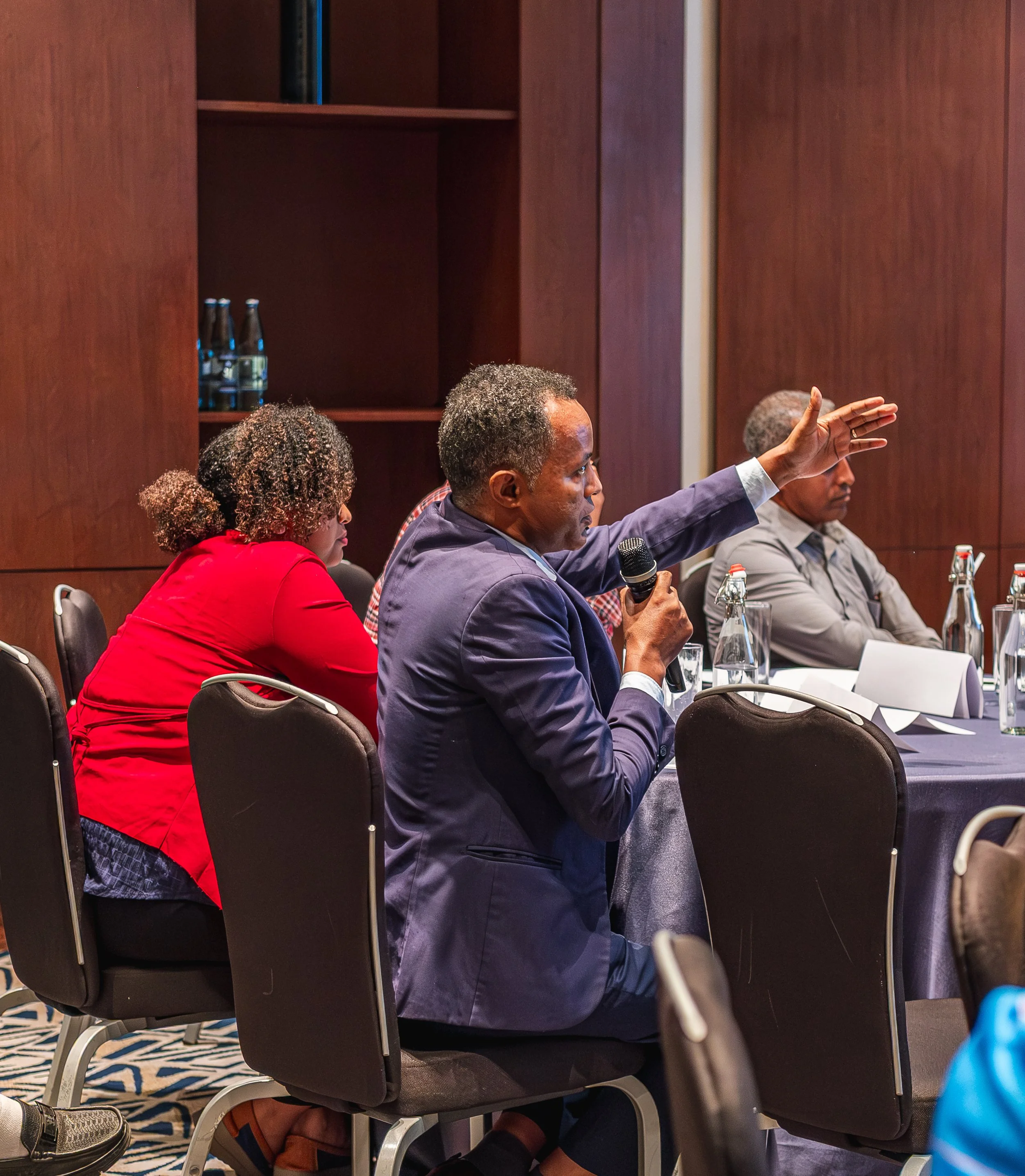
To support organisations in implementing the guidelines and build ESG capacity, the Africa Resilience Investment Accelerator (ARIA) has launched a comprehensive programme. The latest stage of the programme was a two-day workshop in Addis Ababa held on 27-28 April. ARIA's initiative is designed to equip financial institutions with the organisational capacity, internal structures and reporting frameworks they need to become genuinely investment-ready.
Why ESG capacity matters in Ethiopia
"Until recently, there haven't been standardised ESG guidelines for financial institutions in Ethiopia, and this has held firms back from receiving international investment," said Surafel Kelemework, ARIA Country Manager for Ethiopia. "We are delivering an ecosystem-building initiative to roll out the guidelines, prepared by AABE and IFC, and strengthen banks' ESG capacity, organisational structures and reporting frameworks."
The initiative was developed in direct response to investor and business demand. During a DFI engagement visit in late 2024, ARIA gathered feedback from development finance institutions active in Ethiopia, who identified ESG capacity as a priority area for market development. Financial institutions that participated in the first phase of the programme expressed strong support and that engagement has been sustained throughout.
A phased approach
ARIA's initiative is structured across three phases.
In Phase 1, completed in 2025, ARIA conducted a comprehensive diagnostic assessment of ESG capacity across 12 financial institutions in Ethiopia, as well as the broader ESG ecosystem. Each participating institution received an individual scorecard identifying gaps and prioritising areas for improvement. The findings confirmed that, while some institutions have made meaningful progress in recent years, significant capacity gaps remain sector-wide.
Phase 2, which begins with this workshop, will work directly with a cohort of financial institutions through a combination of general ESG training and targeted technical assistance.
Phase 3, to be implemented later in 2026, will focus on building the capacity of critical intermediaries and support organisations - including AABE, the Ethiopian Bankers Association, the Chamber of Commerce and local ESG consulting firms - to foster a resilient, sustainable ESG ecosystem beyond individual financial institutions.
Looking ahead
As a result of the initiative, participating financial institutions are expected to develop stronger internal ESG capacity and become more attractive destinations for DFI and impact investment. More broadly, ARIA aims to contribute to a more resilient and sustainable ESG ecosystem across Ethiopia's financial sector.